


 Deutsch
 Türkçe

Islam is the second largest religion in the world. Most of its 1,6 billion adherents live in South Asia and Africa.
Islam first occurred in the 7th century C. E. in Mecca, a city in modern-day Saudi Arabia. There, the archangel Gabriel conveyed the first verses of the Qur’ran to the Prophet Muhammad. For Muslims, the Qur’an is God’s word. It stands in the same ranks with the Torah, the Gospel, and the Psalms. Muslims believe that since He created man, Allah has sent Prophets to convey the same universal message. The Prophet Muhammad is the “seal”, i. e. the last of them. His words and deeds are exemplary.
Islam rests on the belief in Allah’s oneness and unity. Allah possesses absolute perfection, and He alone is worthy of worship. The “99 names” comprise all divine qualities mentioned in the Qur’an. Two of them are of particular importance: More than a hundred times Allah is referred to as “Rahman” (the All-Merciful) and “Raheem” (the Most Gracious).
The belief in divine oneness and the prophethood of Muhammad are part of the Islamic creed (Shahada), the first of the “Five Pillars”. This term refers to the basic acts of worship every adult healthy Muslim has to perform. Beside the Shahada, they comprise the Fast of Ramadan, the alimony (Zakat), the pilgrimage (Hajj), and the five daily prayers (Salah).
Prayer is a vital part of a Muslim’s daily routine. It is both an expression of submission and an opportunity to pause for a few minutes, to become aware of life’s meaning, and to recharge energy.The supplication (Dua) has neither fixed times nor outer conditions. It can be said at any time and in any language.
Apart from the daily prayers, there are some special prayers which are performed only occasionally. Among them are the weekly Friday Prayer, the Tarawih prayer during Ramadan, and the two festive prayers. These special prayers require a congregation and are led by an Imam. The tasks of an Imam, however, a broader than just leading congregational prayers. He is a religious educator, an advisor, and a counsellor.
Mosques are places of worship, but they also serve as centers of community life. As part of a worldwide Ummah, Muslim communities work to promote social commitment as well as solidarity with people in need. No matter their age or gender, all community members are encouraged to support each other in doing good deeds.
Relief for people in need, the strife for knowledge and education, and acting just in every situation are an expression of an attitude towards life which is nourished by Islamic principles. A Muslim always seeks to win Allah’s pleasure and is thus eager to take responsibility and be helpful. This personal spiritual strife is called “Jihad”.
The Mosque – Muslims in your vicinity
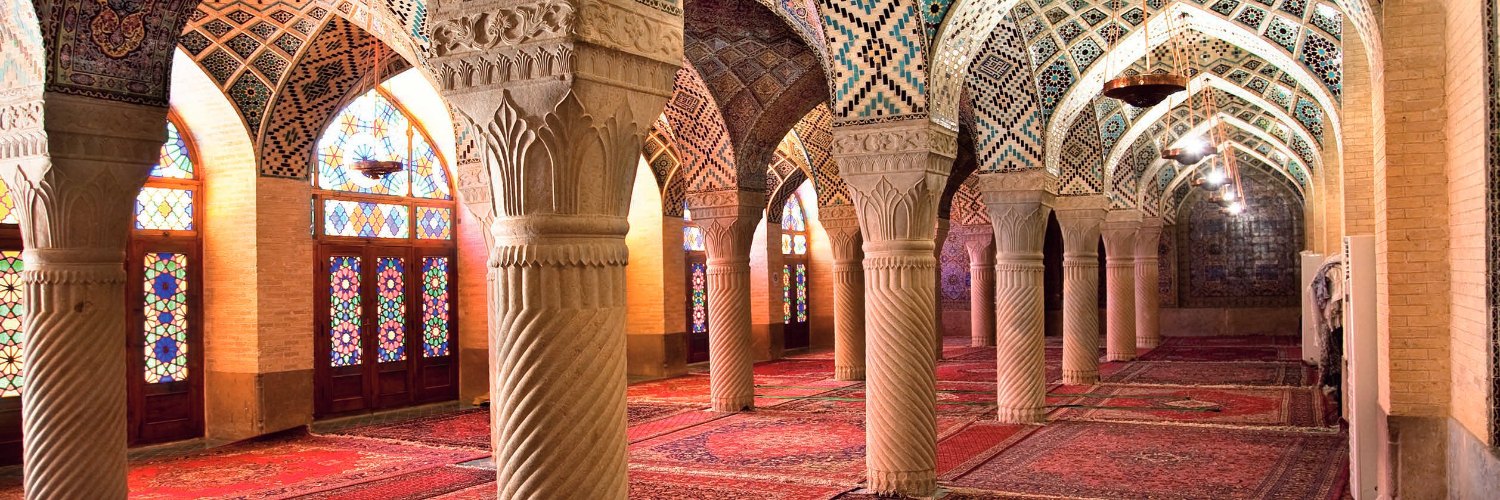
From outside, most mosques in the West are no match for their splendid counterparts in the Islamic World. Many of them were built in the 1960’s and 1970’s by labor immigrants. Especially minarets, tower-like extensions to the main buildings which are used to call to prayer, are often missing.
However, some architectonical elements are mandatory for every mosque. The prayer room is one of them. Inside, visitors can easily spot the carefully decorated prayer niche (Mihrab) which allows foreign Muslims to determine the direction of prayer at one glance. Separate sanitary facilities to take ablution are also indispensable.
Another feature of every mosque is the Minbar, the pulpit, on which the Imam gives the Friday sermon and other lectures. The tradition of erecting a pulpit can be traced back to the Medinan mosque. To this day, the features of the very first mosque built by the Prophet Muhammad and his companions in Medina are exemplary for mosques worldwide.
Community life
The mosque is at the heart of religious life. It offers room for prayer and contemplation but also for social, cultural and charity events. Recently, many mosques put more emphasis on activities for women and youth, thereby answering the challenges of a changing member base. With counselling, language and supplementary courses, supervision of homework, summer camps and sport tournaments, communities actively work to help their members to participate in society and strengthen their identity.
Another important building block are public relations. Interreligious forums, guided mosque tours, and open days serve to reduce mutual fears of contact and pave ways to meet and learn from one another.
Islamic holidays
The Islamic year is interspersed by many holidays and commemorations. The traditions surrounding these holidays are culturally diverse.
The most important holiday is the Feast of Sacrifice. The four-day-holiday starts on the 10th day of Zulhijja, the 12th Islamic month. It marks the end of the annual pilgrimage. When financially possible, a Muslim should slaughter a sacrificial animal (sheep, goat, cow, or camel). Its meat is then shared with the needy because Kurban, like other Islamic holidays, is not just a time of celebration and joy but of solidarity and brotherhood. The Feast of Sacrifice commemorates God’s command to Abraham to sacrifice his firstborn son, Ismael, who was eventually replaced by a ram.
The second holiday is Bayram, the Feast of Breaking the Fast. It starts on the first day of Shawwal, the months immediately following Ramadan, and lasts three days. After the congregational prayer in the mosques, Muslims gather with family and friends to celebrate. Children receive little presents and elderly people are visited at home. On this day, the gratefulness for Allah’s gifts is almost palpable.
Blessed nights and commemoration days
The blessed nights all fall into the three sacred months of Rajab, Shaban, and Ramadan. Since the performance of worship is considered meritorious, Muslims gather in the mosques to recite the Qur’an and remember Allah (Zikr).
On commemoration days, Muslims remember important events in the Islamic history. Among them are the Prophet’s birthday, Mawlid an-Nabawi, and the Ashura Festival on the 10th of Muharram. The fast day of the Prophet Moses is especially significant for Shi’a Muslims: They commemorate the assassination of the Prophet’s grandson, Husayn, in Kerbela.