Friday Khutba
Zakat, Infaq, Fidya and Fitrah
05. March 2026
Dear Brothers and Sisters!
The faith and deeds of a believer support and strengthen one another. A Muslim knows that beyond earning and consuming what is lawful (halal), sharing what they have with those in need is also a requirement of their faith. Wealth is a trust given to us and within this trust lies the right of the poor. In Surah Al-Baqarah, Allah (swt) describes righteousness as follows: “It is not righteousness that you turn your faces toward the east or the west, but true righteousness is in one who believes in Allah, the Last Day, the angels, the Book, and the prophets; who gives wealth, despite loving it, to relatives, orphans, the needy, the traveller, those who ask for help, and those in captivity; and who establishes prayer and gives zakat. Those are the ones who keep their promises when they make a covenant, and who are patient in poverty, hardship, and during battle. Those are the truthful and the God-conscious.”[1]
Dear Brothers and Sisters!
Zakat is one of the five fundamental pillars of Islam. It does not decrease wealth, rather, it purifies it. Indeed, the Messenger of Allah (saw) said,
“Giving charity/zakat does not reduce one’s wealth.”[2]
Zakat cleanses wealth, purifies the heart and brings balance to society. In another hadith, the Prophet (saw) informed us that zakat is a proof of one’s faith, and he also stated that charity extinguishes sins just as water extinguishes fire.[3] This shows that zakat is not merely an economic act of worship, but also a moral and spiritual purification.[4]
Dear Jama’ah!
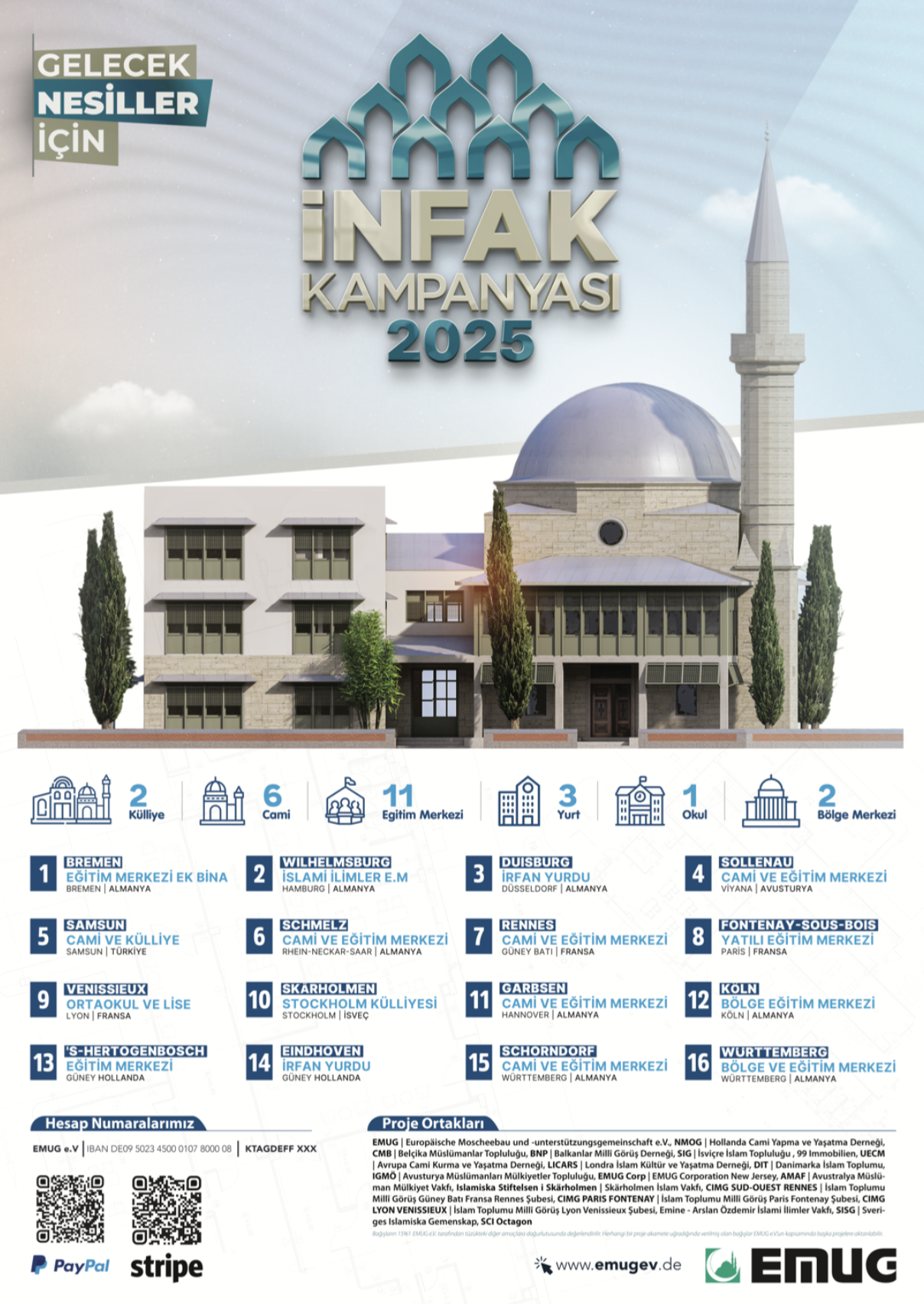
Infaq is not limited to the compulsory zakat. Every act of spending done sincerely for the sake of Allah is considered infaq. A hand extended to the poor, a heart that cares for an orphan, support that gives relief to someone in debt, all of this is infaq. In the Qur’an, it is glad tidings that those who believe, establish prayer and give zakat will have their reward with Allah (swt), they will have no fear, nor will they grieve.[5] This shows that sharing becomes a means of peace and tranquillity both in this world and in the Hereafter.
Dear Brothers and Sisters!
Fitrah (Zakat al-Fitr), which is a form of charitable giving, is an expression of gratitude for reaching Ramadan. A Muslim who possesses wealth equal to or above the nisab amount, beyond their basic needs, is obliged to give fitrah for themselves and for those they are responsible for. Fitrah should be given before the Eid prayer so that those in need can also welcome the eid with peace and joy. Fitrah is given to those who are eligible to receive zakat. It cannot be given to individuals who are not permitted to receive zakat. Fidya, on the other hand, is the compensation given by someone who is unable to fast due to health reasons and has no possibility of making up the missed fasts later. For each missed day, they must give an amount sufficient to feed one poor person. The daily fidya amount is equal to the prescribed fitrah amount. This too is a responsibility of servitude to Allah.
Dear Brothers and Sisters!
Zakat, infaq, fitrah and fidya are guarantees of social justice and brotherhood. Let us give generously. Let us not forget our fidya and fitrah, nor neglect to pay them. Let us bring blessing to our wealth, purify our hearts and bring joy to those in need. By benefiting from the blessings of the holy month of Ramadan, let us pay our zakat by participating in the zakat and fitrah campaign carried out by our organisation together with HASENE.
May Allah (swt) make us among those who give, who are conscious of their responsibilities, who are truthful and God-conscious. May Allah (swt) accept our prayers, our fasting, our zakat and our acts of charity. Ameen.
[1] Surah Al-Baqarah, 2:177
[2] Müslim, Birr, 69
[3] İbn Mâce, Tahâret, 5
[4] İbn Mâce, Zühd, 22
[5] Surah Al-Baqarah, 2:277